Seven, Going on Something: What Developmental Science Says About 7-Year-Old Girls
An Australian psychiatrist's guide to seven-year-old girls: middle childhood, friendship dramas, and the parenting the research actually supports.
There is a particular look that parents of seven-year-old girls describe. It's the look of a child who is no longer a little kid — she rolls her eyes at being called one — but who is also nowhere near the pre-teen years that loom on the horizon. She wants you nearby, but not that nearby. She has Opinions about her friendships, which she analyses with surprising sophistication, and then ten minutes later she is in tears because her sandwich was cut into squares instead of triangles.
Many parents feel this stage has no name. It does. Developmental psychology has been describing it for decades — and the research has a great deal to say about what makes this period distinct, whether seven-year-old girls really differ from seven-year-old boys, and what kind of parenting works best right now.
The in-between stage has a name: middle childhood
For much of the twentieth century, the years between roughly six and twelve were treated as a developmental flyover zone. Freud called it the "latency" period — a quiet plateau between the drama of early childhood and the storm of adolescence. Piaget, too, treated it largely as a period of consolidation.
That view has been thoroughly overturned. In 1984, a landmark National Research Council report, Development During Middle Childhood: The Years From Six to Twelve, edited by W. Andrew Collins, established middle childhood as — in its own words — a discrete, pivotal period of development, worthy of study in its own right. Erik Erikson had already given the stage its emotional signature: this is the era of industry versus inferiority, when children move out of the family orbit and into school, sport, and friendship groups, where they earn their standing through competence and performance.
Children who repeatedly experience themselves as capable develop what Erikson called a "sense of industry." Children who repeatedly experience frustration and failure risk developing a lasting sense of inferiority.
Jacquelynne Eccles, in her influential 1999 overview The Development of Children Ages 6 to 14, captures the parental intuition described above. She divides the span into middle childhood (about 6 to 10) and early adolescence (about 11 to 14), and notes that a crucial cognitive shift occurs around age six — what researchers call the "five-to-seven shift" and what older traditions called the age of reason. It is no accident that every culture with formal schooling begins it between five and seven. By seven, a child can genuinely reason, plan, reflect on her own performance, and — fatefully — compare herself with her peers.
Attachment researchers describe the same transition from a relational perspective. Kathryn Kerns and Laura Brumariu, the leading authorities on attachment in this age band, note that around this age the goal of the attachment system shifts from proximity to availability. The seven-year-old no longer needs you in the room; she needs to know she can reach you. She is content with longer separations as long as contact and reunion are possible — the playdate is fine, provided she knows you'll answer the phone. Attachment theorists call the emerging arrangement a "supervisory partnership": the child increasingly takes responsibility for checking in, communicating her whereabouts, and working with the parent on her problems rather than handing them over wholesale. She is now using you as a resource, not a rescue service.
So yes — the literature describes precisely that "post-toddler, not-yet-tween" feeling. Your daughter is squarely in middle childhood: parents remain her principal attachment figures (research shows that even 11- and 12-year-olds strongly prefer parents over peers when frightened, sad, or sick), but her social and emotional centre of gravity is shifting outward, and her self-concept is being shaped in classrooms and playgrounds.
Is a seven-year-old girl actually different from a seven-year-old boy?
Here, the research offers a wonderfully precise answer, largely drawn from Eleanor Maccoby, the towering figure in gender development research. Her 1990 paper, Gender and Relationships: A Developmental Account, makes a point that should be tattooed on every parenting book: when children are observed or tested individually, behavioural differences between the sexes are minimal. On most measures of ability and personality, boys and girls are far more alike than different, and variation within each sex dwarfs variation between them.
Sex differences emerge primarily in social situations — and at seven, they are striking.
By age six and a half, Maccoby's observations found that children spent roughly eleven times as much time with same-sex playmates as with the other sex. Nobody organises this; children do it themselves across cultures, and adults find it remarkably hard to undo. Within those segregated worlds, two distinct social cultures develop. Girls' groups tend to be smaller and more intimate — typically close friendships with one or two other girls, built on shared confidences. Their conversational style is what researchers call "enabling": expressing agreement, taking turns, acknowledging what the other person says, softening directives, mitigating conflict. Boys' groups tend to be larger, rougher, more public, and more openly organised around dominance — interrupting, commanding, boasting, topping each other's stories.
Two things to expect for the parent of a seven-year-old girl. First, her friendships are likely to be emotionally intense, and their ruptures genuinely painful — Maccoby notes that the breakdown of girls' friendships typically elicits stronger emotional reactions than boys'. The Tuesday-afternoon friendship crisis is not melodrama; it is the central social work of her developmental stage. Second, Maccoby is emphatic that girls in their groups are not unassertive. They pursue their own goals as vigorously as boys do — they simply do so while also working to keep the relationship and the group functioning. Researchers call this the "double agenda": be effective and be nice. It is a sophisticated social skill, and, Maccoby warned, it can put girls at a disadvantage later in mixed-sex settings, which is one reason building girls' confidence in direct self-expression matters.
Even parenting differs in its effects. Diana Baumrind, in her foundational 1966 paper on parenting styles, reviewed evidence that the same child-rearing patterns affect boys and girls differently. For boys, the greater risk was a lack of sufficient warmth or discipline; for girls, an overdose of either — smothering affection or heavy-handed authority — could be the problem. Most tellingly, maternal autonomy-granting predicted good outcomes for girls only when it came packaged with warmth.
Independence offered coldly reads to a girl as detachment; offered warmly, it reads as confidence in her.
For a seven-year-old girl, the sweet spot is freedom with a visible safety net.
What parenting style does the research actually endorse?
Across all of this literature, two ideas keep winning.
The first is Baumrind's authoritative parenting: warm, engaged, and communicative, yet firm in control at genuine points of conflict. The authoritative parent explains her reasoning, invites the child's objections, values the child's autonomy, and expects disciplined behaviour — without caving to win the child's approval. Baumrind's review dispelled the era's popular fears: firm control, when paired with warmth and reasoning, does not breed rebellion or passivity. It was the parents of the most self-reliant, mature children who exerted the firmest control — they simply did so rationally and respectfully.
The second is John Gottman's emotion coaching, from his 1996 work with Lynn Katz and Carole Hooven on "parental meta-emotion philosophy." Emotion-coaching parents notice emotions while they're still small, treat a child's sadness or anger as an opportunity for closeness and teaching rather than a problem to extinguish, validate and help name the feeling, and then problem-solve — including setting limits on behaviour. Their longitudinal study followed children from five to eight (in other words, right across the doorstep of seven) and found that emotion coaching predicted better emotion regulation, better peer relationships, better academic achievement (even after controlling for IQ), and even better physical health at age eight. Equally important was what harmed children: not parental anger, which was unrelated to bad outcomes, but derogation — criticism, intrusiveness, mockery, and sarcasm at the child's expense. You can be cross with your seven-year-old. You should not be contemptuous of her.
Notice how neatly the two ideas dovetail with attachment research: Kerns and Brumariu found that securely attached children in middle childhood have parents who are accepting, support autonomy, use little psychological control, stay knowledgeably involved — and hold an emotion-coaching rather than an emotion-dismissing philosophy. It is the same portrait painted three times by three different research traditions: warmth, structure, and respect for the child's inner life.
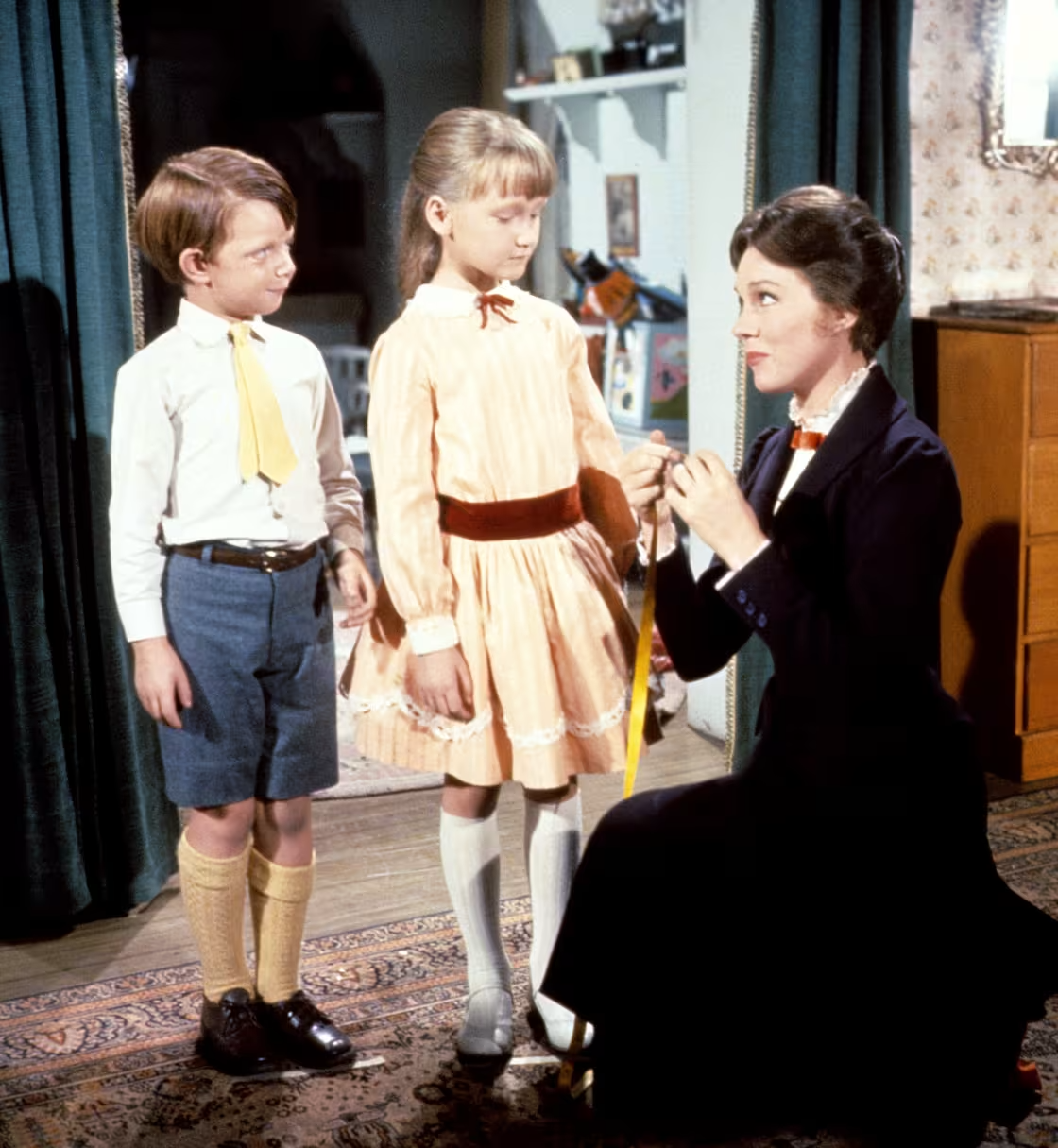
Mary Poppins is the comic shorthand for the style — "kind, but extremely firm" might as well be the authoritative job description — while the Sound of Music's Captain von Trapp dramatises the journey from authoritarian whistle-and-uniform parenting to warmth, with Maria as the resident emotion coach who insists the children's feelings (and play) be taken seriously.
Among real public figures, Michelle and Barack Obama have often spoken about raising their daughters with exactly this blend — non-negotiable structure (bedtimes, chores, sport) within an openly affectionate, talk-it-through household; Michelle Obama has described their approach as raising children who are heard but not in charge.
Closer to home, Australian psychologist Steve Biddulph's bestseller Raising Girls carried much of this same research — warmth, secure attachment, protecting girlhood from premature adolescence — into hundreds of thousands of Australian households.
The common thread: at 5 the parent is the environment, at 7 the parent is the safety net, and at 10 the parent is the consultant — but warmth, structure, and respect for her inner life stay constant throughout.
The takeaway for parents of a seven-year-old girl
Your daughter is in a stage with a name and a rich literature: middle childhood, the age of industry, the era of the supervisory partnership. She is not so different from a seven-year-old boy when she's on her own — but her social world, with its intimate friendships, its enabling conversational style, and its double agenda of effectiveness-plus-niceness, is already distinctly her own. What she needs from you is what research has converged on from three directions: warmth without smothering, firmness without contempt, autonomy with a visible safety net — and a parent who treats her big feelings about small things as an opportunity to connect, not as a fire to put out.
Three practical tips for parenting a 7-year-old girl — and how 5 and 10 differ
Drawn from the research discussed above, here are three things to do right now — with a note on how the same advice shifts at five and at ten.
| Practical tip for the 7-year-old | Why (the research) | How it differs at 5 | How it differs at 10 |
|---|---|---|---|
| 1. Shift from “being there” to “being reachable.” | Kerns & Brumariu: around this age the attachment goal shifts from proximity to availability. She uses you as a resource, not a rescue service. | A 5-year-old still needs proximity — physical presence and short separations. Knowing you’re “phone-able” isn’t yet enough; reunion needs to be soon and concrete. | A 10-year-old can manage much longer separations and more self-monitoring, but parents remain the preferred attachment figures in distress (illness, fear) — don’t mistake independence for not needing you. |
| 2. Treat friendship dramas as serious developmental work, not melodrama. | Maccoby: girls’ friendships at this age are intimate, intense, and their ruptures genuinely painful; the “double agenda” (be effective and be nice) is sophisticated but can disadvantage girls later. Gottman: emotion coaching at 5–8 predicts better regulation, peer relationships, and academics. | At 5, peer play is more fluid and parallel; conflicts are usually momentary and concrete (toys, turns). Coaching focuses on basic labelling of feelings rather than relational repair. | At 10, friendship politics are more complex (cliques, exclusion, early social comparison via group status). Coaching shifts toward perspective-taking and her own strategies — you’re a consultant, increasingly less the mediator. |
| 3. Protect her growing “sense of industry”: be warm and firm, never contemptuous. | Erikson: industry vs inferiority — she’s now building self-concept through competence and peer comparison. Baumrind: firm control + warmth + reasoning produces the most self-reliant children; for girls specifically, autonomy-granting works only when paired with warmth. Gottman: parental anger isn’t harmful, derogation is. | A 5-year-old is just crossing the “five-to-seven shift” — limited capacity for self-reflection and peer comparison, so failure stings less and reasoning needs to be very simple and concrete. Praise can be more global. | A 10-year-old compares herself constantly and accurately; failures (academic, sporting, social) bite harder and a sense of inferiority can consolidate. Reasoning can be more abstract, negotiation more genuine — but the no-contempt rule matters even more as sensitivity to criticism peaks. |
The common thread: at 5 the parent is the environment, at 7 the parent is the safety net, and at 10 the parent is the consultant — but warmth, structure, and respect for her inner life stay constant throughout.
Sources:
Baumrind (1966), Child Development](https://doi.org/10.2307/1126611)
Gottman, Katz & Hooven (1996), Journal of Family Psychology](https://doi.org/10.1037/0893-3200.10.3.243) — see also the Gottman Institute's accessible [introduction to emotion coaching](https://www.gottman.com/blog/an-introduction-to-emotion-coaching/)
Maccoby (1990), American Psychologist](https://doi.org/10.1037/0003-066X.45.4.513)
Eccles (1999), The Future of Children](https://pubmed.ncbi.nlm.nih.gov/10646256/)
Kerns & Brumariu, "Attachment in Middle Childhood," in [*Handbook of Attachment* (3rd ed., Guilford Press)](https://www.guilford.com/books/Handbook-of-Attachment/Cassidy-Shaver/9781462536641)
Collins (Ed.) (1984), Development During Middle Childhood, National Research Council](https://nap.nationalacademies.org/catalog/56/development-during-middle-childhood-the-years-from-six-to-twelve)
— free to read in full.