Cinderella in the Family Court: Fairy Tales, Sibling Rivalry, and the Broken Parental Dyad
Most of us remember Cinderella as the innocent girl tormented by cruel stepsisters, rescued by magic, and rewarded with a prince. It’s a story about goodness triumphing over malice — or so we tell ourselves.
But the psychoanalytic reading is more unsettling and more clinically useful. Bruno Bettelheim, in his landmark The Uses of Enchantment (1976), argued that Cinderella is not simply a victim of her sisters’ cruelty. She is a pubescent girl caught in a psychic distortion — one in which the loss of her “good” mother transforms the surviving parent into a persecutory figure, and her siblings into rivals for whatever love remains. The stepmother isn’t necessarily a new person. She is the same mother, perceived through the lens of grief and displacement. The ugly stepsisters aren’t inherently monstrous. They are ordinary siblings, refracted through a child’s distorted inner world.
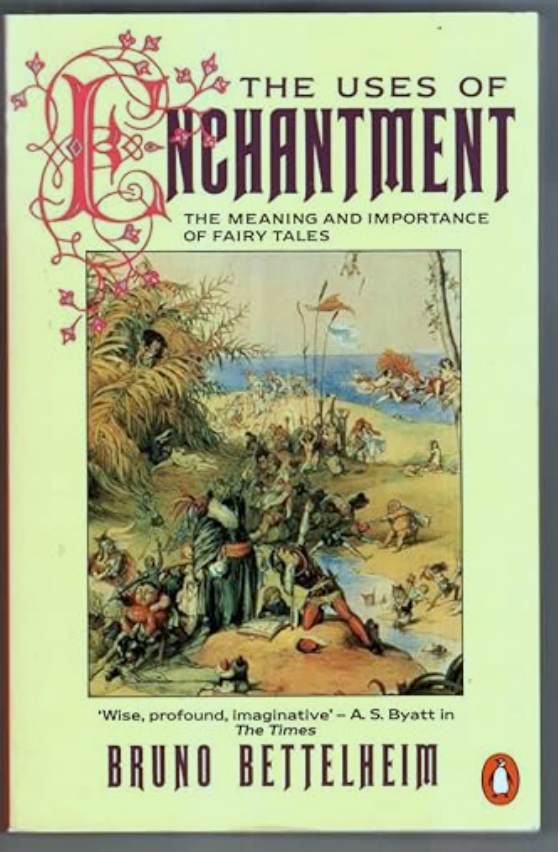
The Split Dyad and the Cinderella Dynamic
In an intact family, the parental couple — whatever its imperfections — serves as a container for sibling relationships. Children can compete, argue, and reconcile within a structure that holds. The parents regulate the emotional temperature. When that couple fractures, particularly in a high-conflict separation, the containing function collapses.
What follows can look remarkably like Cinderella’s household.
Children who once related to each other as ordinary siblings may begin to split along parental lines. One child aligns with the mother, another with the father. The aligned child becomes the favoured one — the “stepsister” who gets to go to the ball — while the other feels displaced, invisible, and forced into the ashes. These roles aren’t fixed. They can reverse depending on whose house the children are in or which parent is currently the more dominant figure in proceedings.
The sibling rivalry we observe in these families is almost never primary. It is symptomatic — a downstream expression of the parental conflict enacted through the children. The child who appears to bully a sibling may be performing loyalty to an aligned parent. The child who withdraws may be mourning a lost family structure they cannot articulate. Neither child is the villain the surface narrative suggests.
What the Fairy Tale Gets Right
Bettelheim understood that fairy tales work by externalising what the child cannot yet name. The wicked stepmother, the jealous sisters, the magical rescue — these give form to internal states that would otherwise remain chaotic and overwhelming. A child doesn’t think in terms of “disrupted attachment” or “parentification.” They think in terms of being made to sleep by the fire while others dance.
This is precisely what we encounter in family court assessments. The child who tells us “Mum loves my sister more” or “Dad only cares about his new family” is not reporting objective reality. They are narrating an internal experience shaped by the fracture around them.
But Heisig’s critique matters here too. He warned against interpretive closure — the temptation to fit everything into a single explanatory frame and declare the case understood. In clinical work, this means resisting the pull to attribute sibling conflict solely to one parent’s alienating behaviour, or to a child’s developmental stage, or to pre-existing temperamental differences. The truth is usually layered, and the layers interact in ways that defy neat formulation.
The “Good Enough” Parent in an Imperfect System
Bettelheim’s later work, A Good Enough Parent (1987), drew on Winnicott’s celebrated concept and applied it to the everyday challenges of child-rearing. His central argument was disarmingly simple: children do not need perfect parents. They need parents who are present, sufficiently attuned, and willing to tolerate their own imperfections in the service of their child’s development. The “good enough” parent doesn’t get it right every time — but they remain emotionally available and repair what breaks.
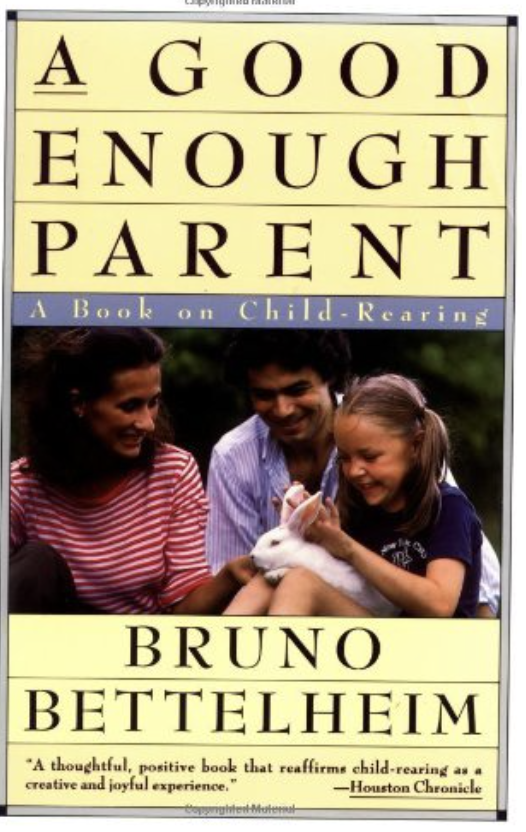
This concept has particular resonance in family court work, where the standard of parenting under scrutiny is never perfection. The Court is not seeking flawless parents. It is assessing whether each parent can provide “good enough” care — that is, whether they can meet the child’s physical, emotional, and developmental needs within an acceptable range. When we assess parental capacity in the context of a separation, we are essentially asking Bettelheim’s question: Can this parent remain emotionally available to their child despite the fracture in the adult relationship?
The difficulty, of course, is that high-conflict separation often erodes precisely the capacities that “good enough” parenting requires. Parents consumed by litigation, grievance, and the need to be vindicated may lose sight of the child’s internal world altogether. They become preoccupied with the adult narrative — who did what to whom — and the child’s experience of sibling displacement, loyalty conflict, and grief goes unwitnessed. In Cinderella’s terms, the parent becomes the stepmother: physically present but emotionally elsewhere.
A Complicated Legacy
It would be dishonest to invoke Bettelheim without acknowledging the substantial controversies surrounding his legacy. As Philip Garner has documented, Bettelheim’s career was marked by serious contradictions. His academic background was in aesthetics, not psychology, and he exaggerated his credentials to gain professional standing. Most troublingly, allegations emerged that he had physically and verbally abused children and staff during his thirty-year tenure at the University of Chicago’s Sonia Shankman Orthogenic School, and that he had contributed to the damaging portrayal of mothers of children with autism — the so-called “refrigerator mother” theory that caused immense harm to families already struggling under extraordinary circumstances.
These are not minor footnotes. They are serious ethical failures that should temper our engagement with his intellectual contributions. At the time of his death, Bettelheim was regarded by many as a towering figure in child psychiatry. In the years since, a more complex picture has emerged — one in which genuine insight coexists with fabrication, and therapeutic sensitivity with personal cruelty.
For clinicians working in family court, there is an uncomfortable parallel here too. We regularly encounter parents whose genuine love for their children coexists with behaviours that cause harm. We are trained to hold complexity, to resist the temptation to split people into wholly good and wholly bad. Bettelheim himself, ironically, is a case study in the limits of that polarisation he claimed to find so clearly delineated in fairy tales.
Cinderella Didn’t Save Herself
Perhaps the most important lesson from the fairy tale, read honestly, is that Cinderella was not the architect of her own rescue. She was acted upon — by grief, family dynamics, and magical forces she didn’t summon. The birds revealed her to the prince. The slipper fit. Things happened to her.
Children in the Family Court are in the same position. They did not choose the separation. They did not create the conflict. They cannot resolve it. When we see sibling relationships deteriorating in the context of parental proceedings, the intervention point is almost always the parental dyad — or what remains of it — rather than the children themselves.
The fairy tale endures because it speaks to something real about the experience of being small, dependent, and subject to forces beyond comprehension. Our job, as clinicians working in this space, is to be the external force that intervenes wisely — not the one that adds another chapter to the story of displacement.
Dr Antonio Simonelli is a Consultant Forensic Psychiatrist based in Sydney, conducting Single Expert Reports and Parenting Assessment Reports for the Federal Circuit and Family Court of Australia.
References
Bettelheim, B. (1976). The Uses of Enchantment: The Meaning and Importance of Fairy Tales. New York: Alfred Knopf.
Bettelheim, B. (1987). A Good Enough Parent: A Book on Child-Rearing. New York: Alfred Knopf.
Garner, P. (n.d.). Bruno Bettelheim: contradictions, controversies and continuities. Unpublished manuscript.
Heisig, J. W. (n.d.). Bruno Bettelheim and the Fairy Tales. In Children’s Literature, pp. 93–114.